NATO-Russia Tensions Escalate as Poland Downs Russian Drones in Airspace Violation
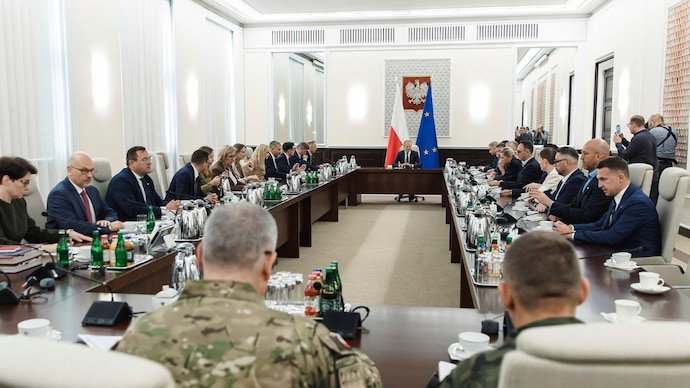
Tensions between NATO and Russia escalated sharply in early September 2025 when Poland detected and shot down multiple Russian drones that violated its airspace. This marked the first time since the Russia-Ukraine conflict began that NATO forces actively engaged Russian military assets in defense of a member country’s sovereignty. Poland invoked Article 4 of the NATO treaty, triggering consultations among alliance members about the security threat. The incident highlighted Russia's strategy of testing NATO’s defenses and resolve, raising serious concerns about the risk of wider military confrontation in Europe. NATO has reaffirmed its readiness to defend all member countries and maintain alliance unity amid these provocations.
The recent escalation in NATO-Russia tensions started when Poland detected and shot down 19 Russian drones that entered its airspace between
September 1 and September 10, 2025. This unprecedented sequence of airspace violations has raised alarm within NATO, as it marks a significant
intensification of Russia’s military pressure on its neighboring countries. The drones are believed to be reconnaissance and possibly armed
unmanned aerial vehicles used by Russia in its ongoing conflict with Ukraine.
Poland's action of shooting down the drones is the first time a NATO member has used lethal force against Russian military assets in
direct defense of its territorial integrity since the start of the Russia-Ukraine war. In response, Poland called for urgent NATO
consultations under Article 4 of the alliance treaty, which requires members to consult each other when their territorial integrity
or security is threatened.
NATO leaders have expressed strong unity and resolve, emphasizing that any threat or violation of an ally’s sovereignty will be met
with collective defense measures. The escalation not only increases the risk of a wider military confrontation in Europe but also sends
ripples through global financial markets due to heightened geopolitical uncertainty.
Global investors remain cautious as these tensions threaten stability in Europe, potentially disrupting energy supplies, trade routes,
and international partnerships. The situation is continuously evolving, with NATO preparations and diplomatic efforts underway to
manage the crisis and avoid further escalation.
The recent escalation in NATO-Russia tensions started when Poland detected and shot down 19 Russian drones that entered its airspace between
September 1 and September 10, 2025. This unprecedented sequence of airspace violations has raised alarm within NATO, as it marks a significant
intensification of Russia’s military pressure on its neighboring countries. The drones are believed to be reconnaissance and possibly armed
unmanned aerial vehicles used by Russia in its ongoing conflict with Ukraine.
Poland's action of shooting down the drones is the first time a NATO member has used lethal force against Russian military assets in
direct defense of its territorial integrity since the start of the Russia-Ukraine war. In response, Poland called for urgent NATO
consultations under Article 4 of the alliance treaty, which requires members to consult each other when their territorial integrity
or security is threatened.
NATO leaders have expressed strong unity and resolve, emphasizing that any threat or violation of an ally’s sovereignty will be met
with collective defense measures. The escalation not only increases the risk of a wider military confrontation in Europe but also sends
ripples through global financial markets due to heightened geopolitical uncertainty.
Global investors remain cautious as these tensions threaten stability in Europe, potentially disrupting energy supplies, trade routes,
and international partnerships. The situation is continuously evolving, with NATO preparations and diplomatic efforts underway to
manage the crisis and avoid further escalation.